
East Kalimantan, a land that cradles nature’s secrets, stands as a guardian of a long and rich history. Its people, including the Dayak and Kutai communities, embrace cultural diversity with no fewer than sixteen regional languages sung like melodies across the province.
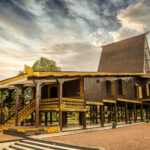
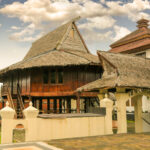
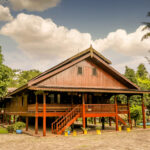
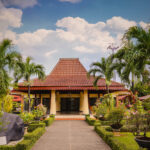
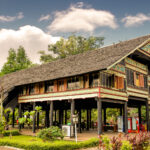
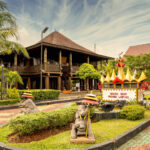
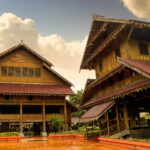
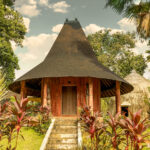
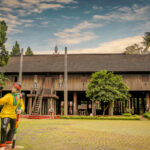
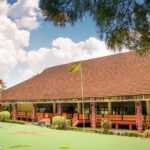
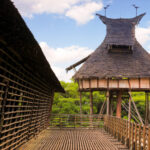
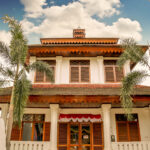
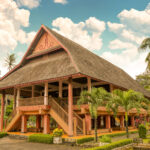
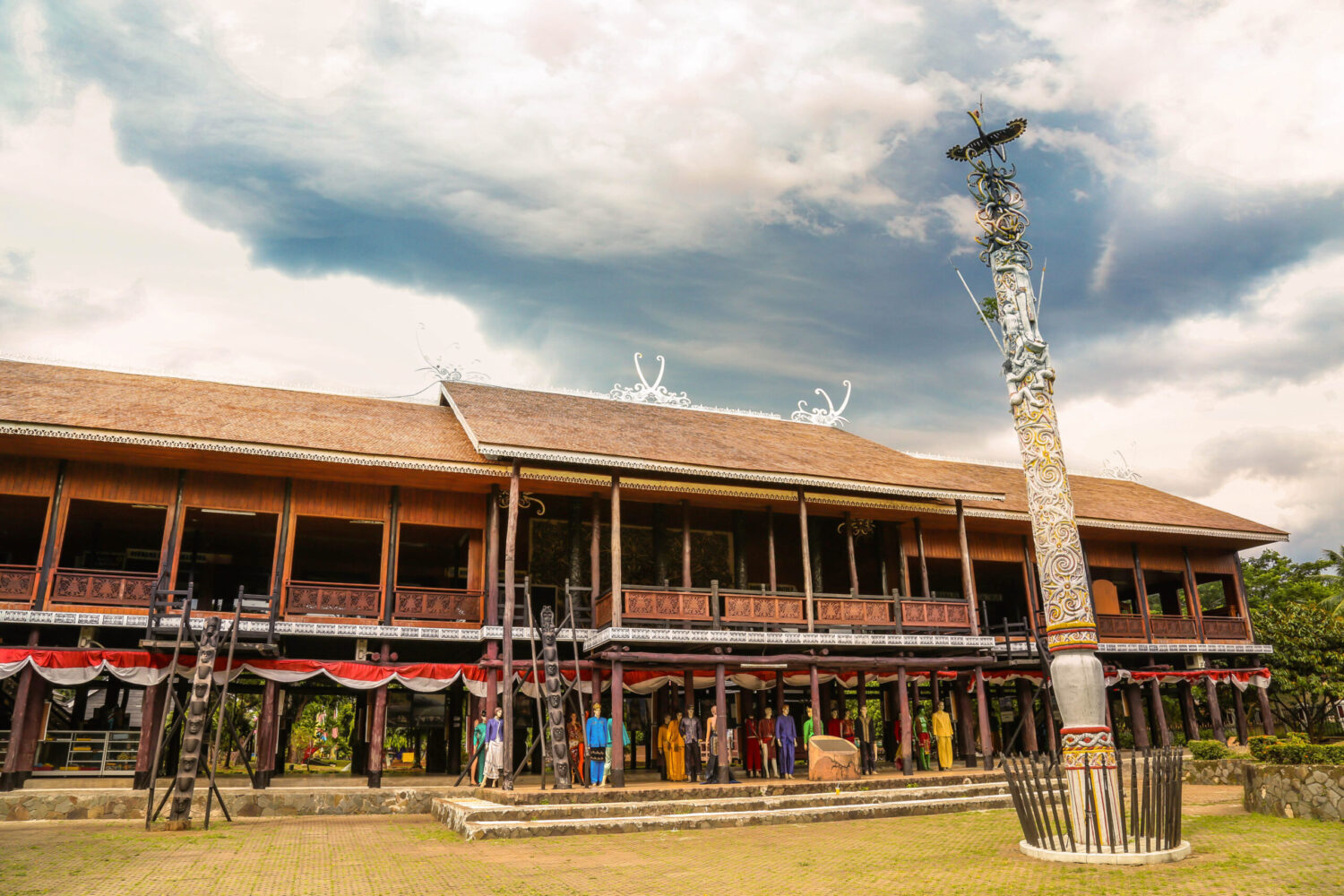
At the East Kalimantan Pavilion in TMII, visitors can witness this cultural richness through the traditional Lamin house, whose name means “large.” Remarkably, no nails are used in constructing this imposing structure made from durable ulin (ironwood). Instead, wooden pegs and rattan ropes serve as the essential connectors, representing the endurance of tradition. A staircase leads guests into this elevated home, which typically accommodates several families under one roof. This communal living gives rise to the deeply rooted tradition of gotong royong, or mutual cooperation.
The central room, traditionally used to welcome guests, now serves as a cultural showcase for ethnographic treasures. These include the Bening Aban (a child-carrying device), traditional attire, royal jewelry, and distinctive Dayak cultural paintings. The house is adorned with symbolic ornaments, such as the hornbill, representing nobility and virtue; the dragon, signifying mystical power, heroism, and strength; the squid, which symbolizes the spirit of the people; and masks, evoking peace. Each color used in the decoration carries its own meaning: yellow for majesty, red for bravery, blue for devotion, and white for purity.
DID YOU KNOW?
Ruhui Rahayu, the official motto etched into the bottom of East Kalimantan’s provincial emblem, is deeply cherished by its people. This phrase embodies the collective hope and vision of East Kalimantan’s society to attain social harmony filled with happiness, justice, and prosperity in a safe and peaceful environment, blessed by Allah.