
Wa, wa, wa!
This is the traditional greeting of the highland communities in Papua, a province where 80 percent of the land is covered in dense tropical rainforest. Papua is home to many semi-isolated indigenous tribes. Its people speak a variety of local languages, such as Tobati, Kuimen Sewan, Kauwerawet, and Serki, which are classified under the Melanesian language group.
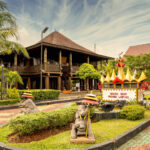
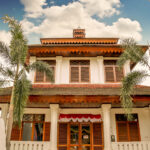
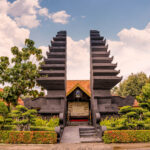
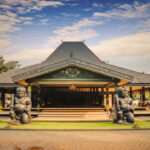
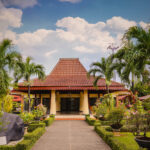
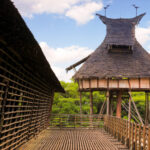
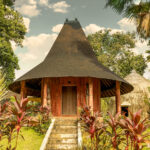
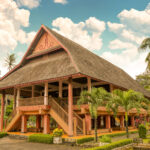
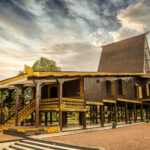
At the Papua Pavilion in TMII, visitors are taken on a cultural journey through Papua with replicas of the Kariwari and Honai houses that represent the region’s rich heritage. The Kariwari house is a sacred structure used for worship by the Tobati-Enggros people who live along Lake Sentani in Jayapura Regency. With its octagonal pyramid shape and cone-shaped roof traditionally made from sago palm leaves, the house displays a collection of distinctive Papuan ornaments. On display are Asmat statues, poisoned arrows, semang boats, shell currency, and various traditional costumes such as the koteka (Papuan penis sheath), along with ceremonial statues used during tattooing rites on adolescent boys’ backs, all showcasing Papua’s unique local wisdom.
The rooms within the Kariwari house highlight Papuan traditions through artifacts rich in myth and history, including paintings, statues, animal skulls and jaws, rattan bracelets, and tor—wooden, carved implements used to pound mortars during traditional dances. Also featured is a man-made lake with a shark statue, a long Asmat canoe, and models of endemic animals such as the cuscus, tree kangaroo, and four-legged snake.
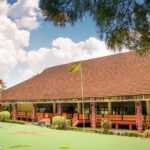
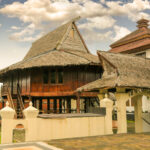
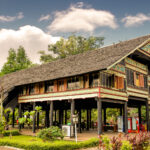
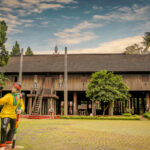
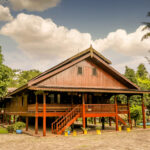
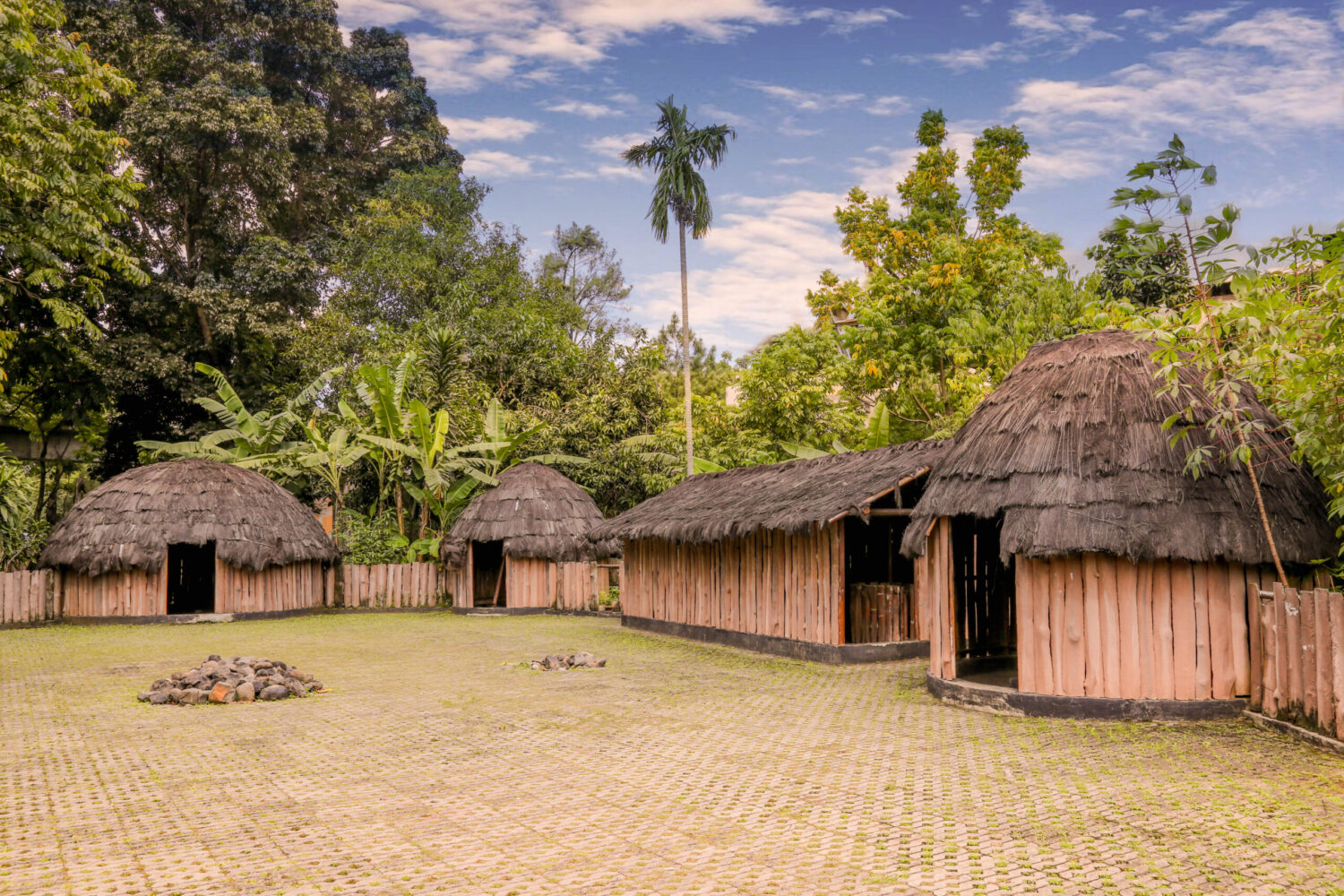
In addition to the Kariwari house, the Papua Pavilion also presents the Sili house, inhabited by the Dani tribe in the Baliem Valley, as well as structures designated for men, women, and even animals. The Honai house is used by men, while the Ebey Honai is reserved for women. Beds are built on elevated platforms under the roof, and the ground level serves as a fireplace to keep the home warm. Uniquely, even pigs have their own house called the Wanai Honai.
DID YOU KNOW?
If you’re lucky, you might witness or even participate in the carving of Mbis statues by Asmat artists during special visits to the Papua Pavilion. As a souvenir, you can even bring home your very own handcrafted Asmat statue.