

Salama engka!
South Sulawesi, a province renowned for its delicious culinary offerings such as Pisang Epe, Es Pisang Ijo, Barongko, Coto Makassar, Sop Konro, Ikan Bakar Parape, and Songkolo Bagadang, promises a unique experience that cannot be found elsewhere.
The province spans approximately 82,768 km² and is home to the Bugis, Makassar, and Toraja ethnic groups. The Bugis and Makassar people typically inhabit the southern, eastern, and western coastal areas, while the Toraja people reside in the highlands, at elevations of 700 to 1,200 meters above sea level.
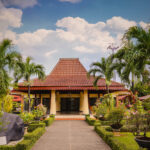
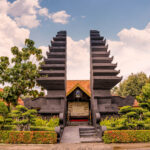
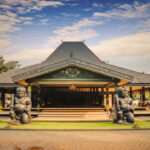
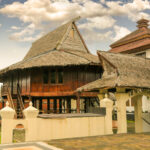
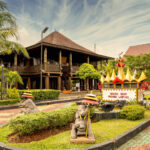
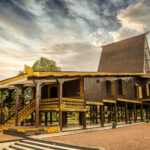
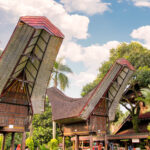
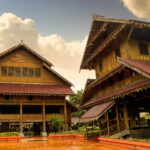
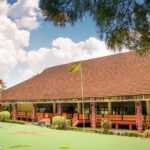
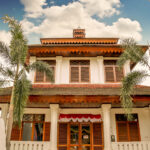
The South Sulawesi Pavilion at TMII showcases three traditional houses: the Tongkonan House of the Toraja, the Balla Lompoa House of the Makassar, and the Bola or Souraja House of the Bugis.
In the Bugis-Makassar area, the homes of nobles feature distinct elements not found in ordinary people’s dwellings. Inside, you will find a Rakkeang (Bugis) or Pammakkang (Makassar), used for storing heirlooms, rice, and other food supplies. There is also the Kale Balla, which consists of a living room, bedrooms, and dining area, along with the Awasao or Passiringan, where livestock are kept and farming tools are stored. While exploring, visitors can experience South Sulawesi’s cultural richness through displays of hunting tools, forest products, handwoven crafts, and traditional attire from each ethnic group.
Meanwhile, Toraja traditional houses typically face north, with roofs shaped like perahu wangka (Bugis boats), adorned with carvings in red, white, yellow, and black. The buffalo horns displayed at the front of the house symbolize the number of traditional funeral ceremonies held by the household.
The Toraja people, whose funeral ceremonies are often more elaborate and costly than weddings, decorate the fronts of their homes to reflect the owner’s social status. Three pairs of buffalo heads (Kabonga) are symbols of nobility, while rows of intricately carved rice barns (alang) in front of the house represent the wealth of the household.
DID YOU KNOW?
In the Torajan worldview, the buffalo, particularly the tedong bonga, is considered a mystical creature. This revered animal is believed to serve as a vessel for the soul on its final journey to the afterlife. For noble funerals, it is not uncommon for the number of sacrificed buffaloes and pigs to reach into the hundreds, signifying honor, wealth, and spiritual devotion.