

What is the word for “welcome” in the local language of Southeast Sulawesi? You might be surprised to learn that there is no single answer. With 14 regional languages still in daily use, the province known for the warmth of its people, embraces a diversity that is truly astounding. The population includes various ethnic groups such as the Tolaki, Buton, Mekongga, Muna, and Kaba Ena.
The richness of Southeast Sulawesi lies not only in its people but also in its cultural and natural abundance. In its fertile lands grow ironwood, miba, teak, and rattan, while beneath the surface lie valuable deposits of nickel and asphalt. The natural attractions are equally mesmerizing, such as Nirwana Beach, Napabale Lake, Batu Gong, the scenic Toli-Toli region, Watumuhae Nature Park, Moramo Waterfall, Lapuko Beach, and Ulung Golaka hot springs all beckon travelers to explore their wonders.
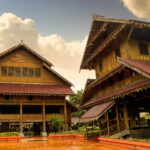
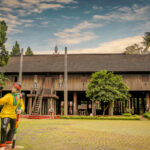
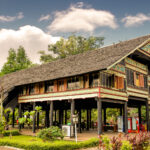
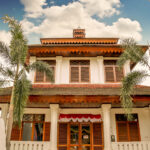
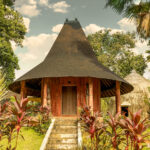
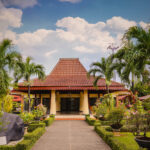
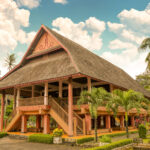
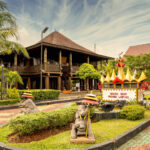
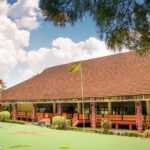
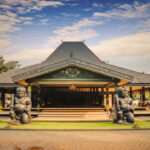
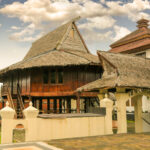
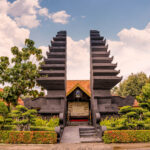
The Southeast Sulawesi Pavilion at TMII invites visitors to delve into the traditions and heritage of the province’s many ethnic groups. At the heart of the pavilion stands the majestic replica of the Buton Sultan’s Palace, known as Malige. What makes this four-story wooden structure remarkable is its construction—built without nails or fasteners, the entire building holds together through intricate interlocking joints.
The first floor of Malige represents the living quarters of the king and his queen, complete with a dining room, bedroom, and front parlor. These spaces also display a variety of traditional garments that represent the region’s cultural legacy. Visitors can step back in time as they view ceremonial attire of the Sultan of Buton and his consort, the King of Muna, the kapitalao (war commander), Bonto Balano (chief minister), the pasi (royal heirloom keeper), as well as traditional clothing from districts across the province.
Don’t miss the opportunity to witness traditional ceremonies often held at the pavilion, such as wedding rituals, motasu (a ritual marking the opening of new farmland), and many others, typically concluded with the Molulo dance. This dance is performed by men and women holding hands in a circle, synchronizing their movements and footwork to the rhythm and dynamics of the music. The beauty of this traditional Southeast Sulawesi art form creates a warm and joyful atmosphere.
DID YOU KNOW?
Wakatobi National Park in Southeast Sulawesi has been designated a UNESCO World Biosphere Reserve. Beneath the sunlight that filters through its pristine waters, the park is home to at least 750 out of the world’s 850 coral species, making it one of the most biodiverse marine ecosystems on Earth. It’s no wonder Wakatobi draws explorers and researchers from all over the globe, all eager to experience its breathtaking underwater treasures.